Charging

Bidirectional charging: when your electric car becomes an energy store

Bidirectional charging means that electricity doesn't just flow into the car – it can flow back out again too. This turns the battery into storage for your own home, for individual devices or even for the power grid. What used to be a dream of the future now works with many models. This article explains the terms, the state of the technology and what you need for it in Switzerland.

author image

Written by Hans on 05.02.2024

What does bidirectional charging actually mean?
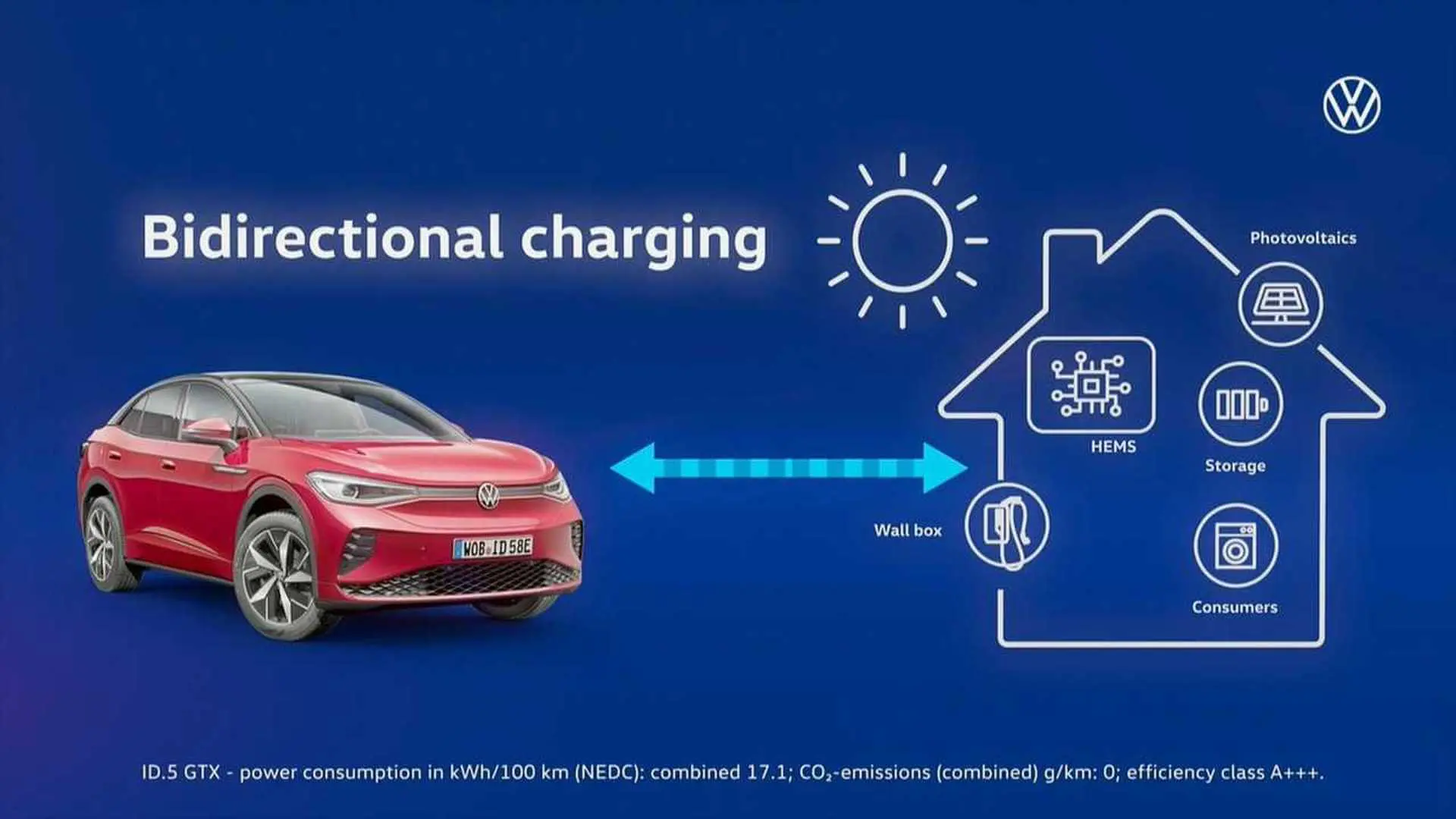
Bidirectional charging allows electricity to flow not only towards the battery but also in the opposite direction. This means an electric car's battery can be used as energy storage. When needed, energy that has been charged into the electric car can be drawn out again. This creates numerous use cases that expand what an electric car can be used for: no longer just a means of transport, but a mobile and flexible energy store.

V2X, V2H, V2B, V2G, V2L – V2-what?

V2X is the umbrella term for the many bidirectional use cases and stands for Vehicle-to-Everything. 

V2H – Vehicle-to-Home

With vehicle-to-home, the vehicle is used as battery storage to supply the building when the sun isn't shining. This use case is especially interesting for homeowners with an electric car. The car replaces or supplements any existing stationary battery in the PV system. This application is run with a HEMS (home energy management system) such as Helion ONE, which manages energy distribution in the home as the owner wishes. 

V2B – Vehicle-to-Building

V2B is an extension of V2H and is aimed more at apartment buildings and businesses. It's no longer just about optimising self-consumption, but also about peak shaving (cutting load peaks). 

V2G – Vehicle-to-Grid

Electricity from the vehicle is used specifically in the public grid. By charging and discharging the battery at the right moment, the power grid is stabilised – the keyword here is balancing energy. The Swiss research project “V2X-Suisse” tested this use case in everyday conditions with 50 vehicles between 2022 and 2024 and has now been completed. The result: technically it works – the vehicles delivered the requested amount of electricity within seconds. Around CHF 600 per vehicle per year could be earned – not enough to cover the costs of the test phase, which is why the partners are not continuing ongoing operation for the time being.

The biggest hurdle was regulatory: double grid fees made feeding electricity back into the grid unattractive. The Electricity Act adopted in June 2024 refunds these fees and applies from 2025, but the related ordinances were still being drafted when the project ended. For private individuals in Switzerland, V2G is therefore still not ready for everyday use – but the groundwork for it has improved.

V2L – Vehicle-to-Load

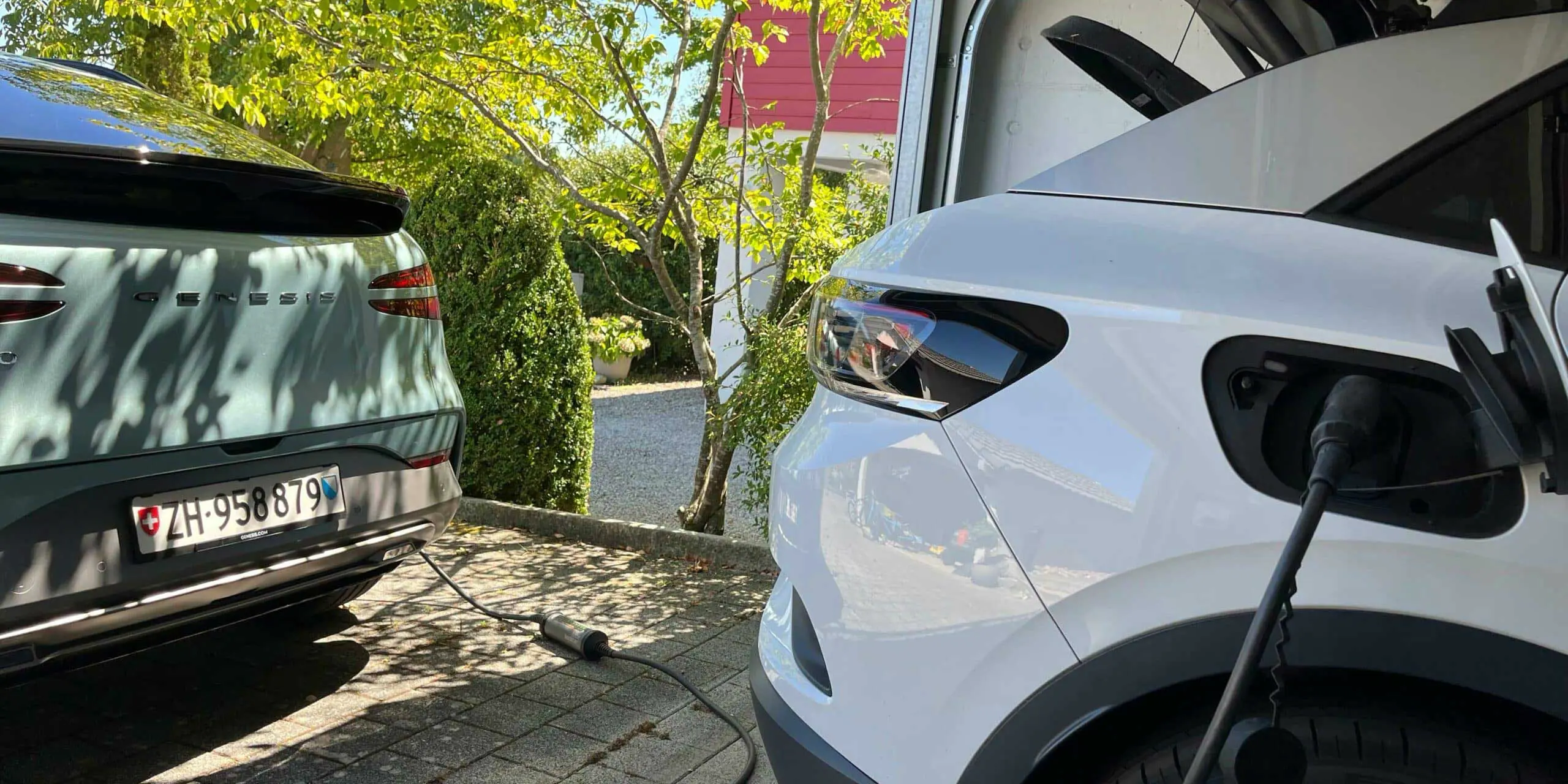
V2L is the simplest of all bidirectional applications. It's about powering devices directly from the vehicle. Using built-in 230 V sockets in the car or an adapter on the Type 2 socket, devices can be supplied directly – whether it's a string of fairy lights, a vacuum cleaner or even emergency charging for a second electric car.

V2L is also the use case that already works today without any additional hardware: on many current models, the socket in the vehicle or an adapter is all you need.

Can my car support bidirectional charging?

Many current models already support V2L. At Volkswagen, the function is available for all ID. models with ID. Software 6, and for older vehicles from ID. Software 3.5 with a battery of at least 77 kWh. Up to 3.6 kW can be delivered, either via a 230 V socket in the interior or the PowerSocket adapter. Several models from other manufacturers also come with V2L as standard.

V2H also requires a suitable wallbox, and communication between vehicle and station is manufacturer-specific. VW publishes a list of approved bidirectional DC wallboxes for this.

V2G is still not available to private individuals in Switzerland – see the section on V2X-Suisse above.

Can my wallbox support bidirectional charging?
Bidirectional charging currently relies on DC-coupled charging and discharging. This means you need a DC charging station, like the ones you know from fast charging on the road. Admittedly with much less power – 10 kW or 20 kW is typical – but it requires a lot more technology in the charging station than a standard AC charging station for home use. As a result, currently available charging stations that support bidirectional charging still cost several times more than a standard charging station. So for V2H: an existing AC wallbox usually isn't enough – you need a bidirectional DC station approved by the manufacturer. For V2L, on the other hand, you don't need a wallbox at all – the socket in the vehicle or an adapter is enough.

What does the future hold?

Where things stand today can be summed up in three stages. V2L works on many current models without any extra effort – it has arrived. V2H is technically available, but requires an approved DC wallbox that is considerably more expensive than a standard charging station. V2G remains off-limits to private individuals in Switzerland for now, even though the new Electricity Act has removed an important hurdle.

What matters in the coming years: falling prices for bidirectional charging stations, uniform standards across manufacturers and the ordinances on the flexibility market. Things are moving on all three fronts.

The options at a glance

What happens

What's needed

Status today

V2L Vehicle-to-Load

Power devices directly from the car

Socket in the vehicle or adapter

available on many models

V2H Vehicle-to-Home

Supply your own home

Approved bidirectional DC wallbox, HEMS

available, but expensive

V2B Vehicle-to-Building

Apartment building or business, cutting load peaks

as V2H, plus building technology

in isolated cases

V2G Vehicle-to-Grid

Feed electricity back into the public grid

Grid access, regulation, marketing

not available to private individuals

Just try it.
Your way.

Start your journey into e-mobility now, risk-free: insurance, service, taxes and, if you want, even electricity in one monthly rate.

Other electrifying articles: