Charging

Charging time for electric cars: how long does charging take?

How long an electric car takes to charge depends mainly on two things: the charging power and the battery. At a fast-charging station, 10 to 80% is done in 20 to 30 minutes; at an 11 kW wallbox, the same amount takes around four hours, and at a household socket over a day. Here's an overview of the times, the formula to work it out yourself and tips for the wait.

author image

Written by Laura on 29.09.2022

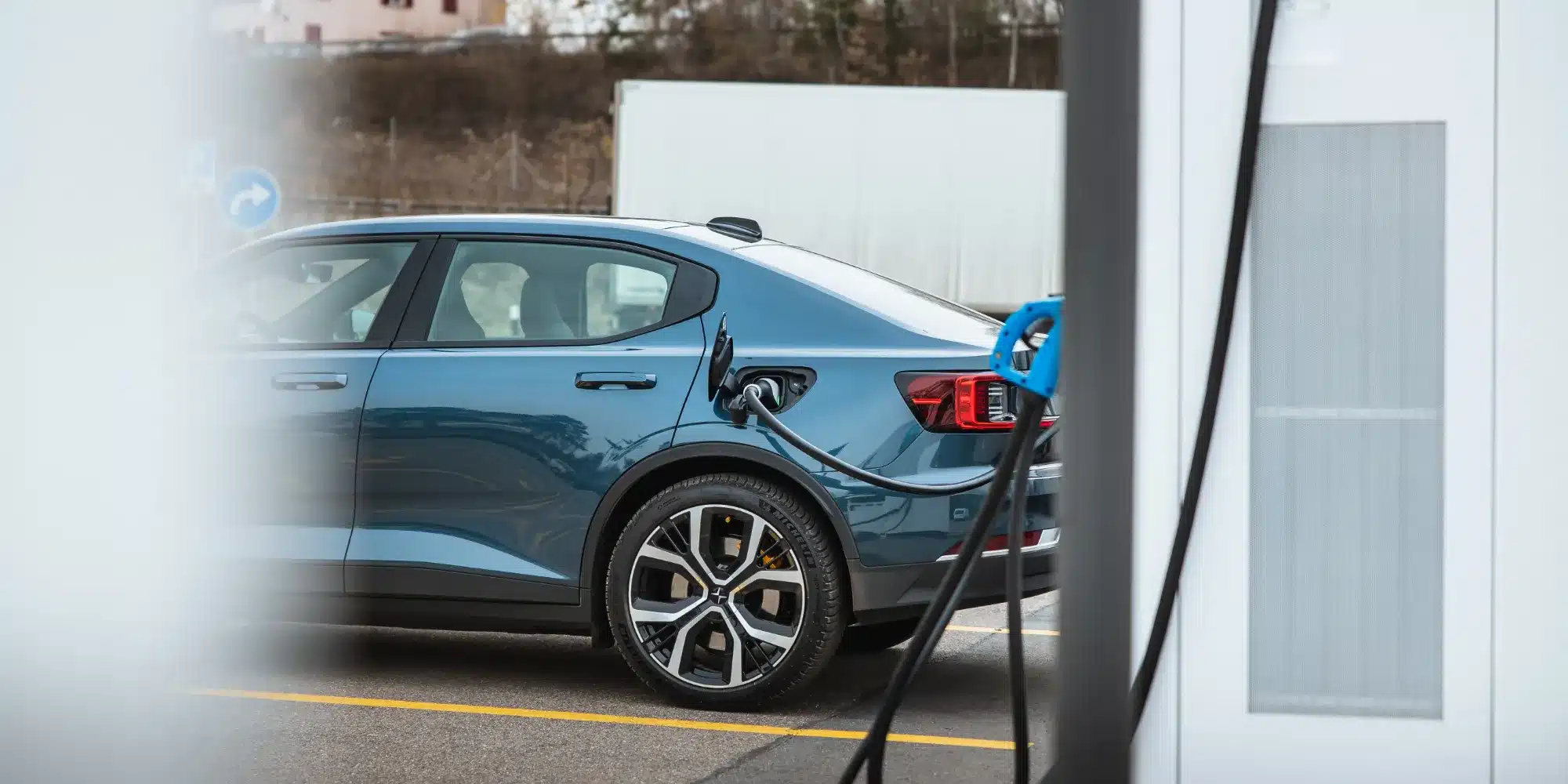
A woman in a gray blazer stands by a blue smart #1, checking her phone while it's charging.

We all know that refuelling a combustion engine car doesn't take long: drive to the petrol station, put the nozzle in and a few minutes later the tank is full. It's not quite that quick with an electric car – but it usually charges wherever it's parked anyway.

There's no one-size-fits-all answer. Sometimes it takes less than 30 minutes, sometimes several hours. Several factors determine this.

Charging times at a glance

Charging power

10 to 80% at 60 kWh

Household socket (T13): Emergency use only. Household wiring isn't designed for this continuous load.

2.3 kW

around 18 hours

Wallbox at home: the usual solution at home and at work.

11 kW

around 4 hours

Public AC charging station: stations are often 22 kW, but most cars only accept 11 kW.

11 to 22 kW

2 to 4 hours

DC fast-charging station: for on the road, at motorways and fast-charging hubs.

50 to 150 kW

25 to 60 minutes

HPC fast charger: the highest level, only fully used by newer models.

up to 350 kW

around 20 minutes

Values apply to a 60 kWh battery charged from 10 to 80%, i.e. around 42 kWh. Charging power and charging time vary depending on the model, battery capacity and temperature.

What does an electric car's charging time depend on?

1. The on-board charger

The charging time of electric cars varies depending on the model, or more precisely on the power of the on-board charger. This converts alternating current (AC) into direct current (DC), because an electric car's battery can only store direct current.

Important: when AC charging, this charger limits how much power the car accepts in the first place. A 22 kW charging point won't charge a vehicle with an 11 kW charger any faster than an 11 kW wallbox. With DC charging, this bottleneck disappears because the conversion takes place in the charging station.

→ More on this: AC and DC charging: what's the difference?

2. The charging station

Household socket, wallbox or fast-charging station: depending on where the electric car charges, it takes more or less time. It's quickest at a DC fast-charging station. You'll find the figures in the table above.

3. The electric car's battery

It's not just the battery capacity that affects the charging time, but also the charge level. At a fast charger, an almost empty battery accepts the highest power; the fuller it gets, the more the vehicle throttles the power. With AC charging, this hardly matters – the power stays the same over almost the entire range.

Temperature also affects charging time: if the battery is cold before charging, it charges more slowly.

→ Electric cars in winter: tips to prevent range loss

“At a state of charge (SOC) of 80 per cent, the charging power is gradually reduced to prevent the battery from overheating and suffering permanent damage.”

An electric car's charging time: work it out yourself

To find out how long a particular electric car or model takes to charge, you can use a very simple formula:

Battery capacity (kWh) / charging power (kW) = charging time (h)

An example: 60 kWh at an AC charging station with 11 kW of power gives around five hours and 30 minutes.

Two caveats: the formula works well for AC charging because the power stays constant. At a fast charger, it gives overly optimistic values, because the vehicle throttles the power as the charge level rises – there, allow around a third more time than the formula suggests. And what matters is the power that actually reaches the car, not the figure written on the charging point.

Tips for the wait when charging your electric car

How to cut your charging time

Preheat the battery. Plan your charging stop using your car's navigation system. Many models will then preheat the battery on the way to the station, so charging power is high from the start. Otherwise, a cold battery charges much more slowly.

Arrive with a low charge level. At a fast charger, an almost empty battery accepts the highest power. If you arrive at 50%, you'll add much less per minute than someone at 15%.

Carry on at 80%. Above this charge level, the vehicle throttles heavily. The last 20% often takes as long as the first 60. On the road, a second short stop is better than charging to full.

Sort out payment in advance. Set up your charging card or app before you're standing at the charging point. Nothing extends a charging stop more reliably than registering with bad reception.

And while you wait

Stretch your legs. Get out for a bit, take a few steps, take a breath. After two hours on the motorway, that does more good than another cup of coffee.

Clean the windows. Twenty minutes is plenty of time for the windscreen and mirrors. Bug remover or a sponge with a water tank are better kept in the boot than on a shelf at home.

Listen to an episode. A podcast episode fits almost exactly into a fast-charging stop. Keep the volume low enough to hear warning signals from outside.

Good to know: in everyday use, try to keep your charge level between 20 and 80%. This is gentler on the cells and also the range in which charging is fastest.

Frequently asked questions

At a DC fast-charging station, it takes 20 to 60 minutes to charge from 10 to 80%. At an 11 kW wallbox, it takes around four hours, and at a 2.3 kW household socket over 18 hours. These figures apply to a 60 kWh battery.
Battery capacity divided by charging power gives you the charging time in hours. So 60 kWh at 11 kW is around five and a half hours. At a fast charger, allow about a third more time, because the vehicle throttles the power as the charge level rises.
The vehicle deliberately throttles the power to protect the cells from overheating and premature ageing. On the road, it’s therefore usually worth carrying on at 80% and stopping again briefly later.
Technically yes, as an emergency solution. At 2.3 kW, however, a full charge takes more than a day, and household wiring isn’t designed for this continuous load. For regular use, a wallbox is the right solution.

Just try it.
Your way.

Start your journey into e-mobility now, risk-free: insurance, service, taxes and, if you want, even electricity in one monthly rate.

Other electrifying articles: