Charging
AC and DC charging: what's the difference?
AC and DC charging: what's the difference?
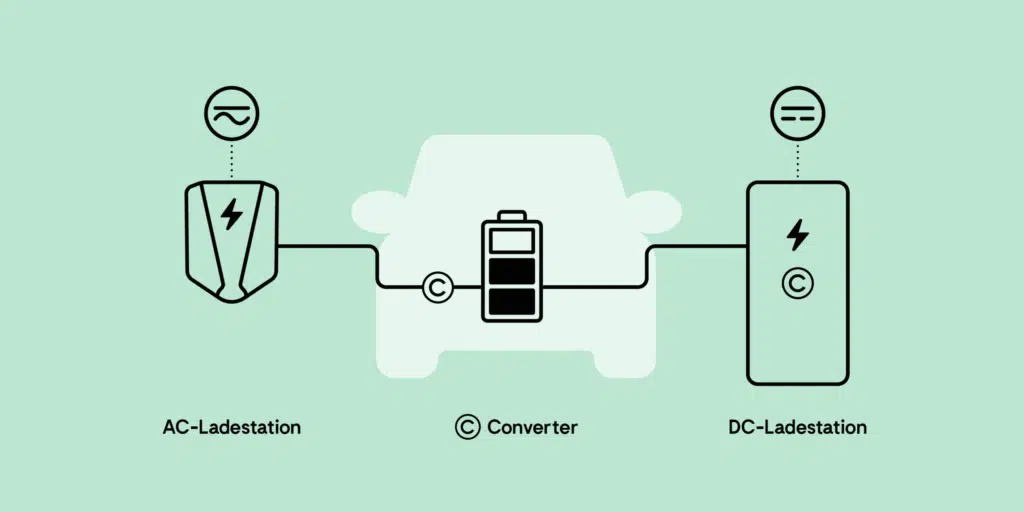
AC stands for alternating current, DC for direct current – and the difference when charging comes down to one thing above all: where the electricity is converted. With AC charging, this happens in the car; with DC charging, in the charging station. That's why DC charging is faster. So the rock band was right all along that the two belong together. Here's what that means in everyday life.

Written by Laura on 30.08.2022

What is the difference between AC and DC charging stations?
AC charging station
Alternating current → standard charging stations The direction of the current changes constantly Charging power: up to 22 kW depending on the model, usually 11 kW in practice, limited by the car
DC charging station
Direct current → fast-charging stations The current flows constantly in one direction Charging power: up to 350 kW
AC or DC charging point: which is the right choice ?
Clyde : your electric car made easy
Frequently asked questions
Other electrifying articles:
 23. April 2026
Charging
Is using an electric car without your own charging station really possible in everyday life?
No parking space, no problem: we show how charging without a home charging station works in everyday life – with alternatives for tenants in Switzerland.
 13. May 2025
Charging
Can I charge my electric car directly from my solar PV system?
Charging your electric car with your own solar PV system – does it work? E-mobility expert Hans Fischer explains. Find out more now!
 07. March 2025
Charging
Charging an electric car in Switzerland: What costs should you expect?
How much does it cost to charge an electric car in Switzerland? The latest prices at home, at public charging points and at fast chargers – plus costs per 100 km.
 05. February 2024
Charging
Bidirectional charging: when your electric car becomes an energy store
Find out more about bidirectional charging for electric cars. We explain whether your car or wallbox supports this innovative technology.
 14. August 2023
Charging
Home charging station: also for tenants and co-owners
Interested in an electric car and want to know more about home charging stations? Here's all the info at a glance.
 04. April 2023
Charging
Electric car range: how far you can go with an electric car
How far does an electric car go? The models with the longest range, the formula to work it out yourself and what winter, speed and driving style really cost you.
 29. September 2022
Charging
Charging time for electric cars: how long does charging take?
How long does an electric car take to charge? Charging times from a household socket to a fast charger, the formula to work it out yourself and tips for the wait.