Charging

Is using an electric car without your own charging station really possible in everyday life?

Around 56% of the Swiss population rent their homes. Many of them don’t have their own parking spaces or a cooperative landlord – meaning they don’t have any charging facilities. For many, this is the main reason they don’t drive an electric car. But e-mobility can also work without a wallbox – if you know how.

author image

Written by Livia on 23.04.2026

No wallbox? No problem. If you know the alternatives, you can find a solution. Here they are.

Charging at work: the underrated solution

People who drive to the office every day often have the best charging solution right on their doorstep. Their car is sitting in the company car park for hours anyway. More and more companies are equipping their parking spaces with charging stations, often at reduced rates or free of charge for employees. If you have this option, you don’t need a home charging station. The vehicle simply charges during working hours.l.

Ask your landlord – it’s worth it

If you don’t have a workplace with a charging station, it’s worth checking with your landlord. This often has little effect on its own. Together with other neighbours who are also interested in an electric car, however, the chances increase significantly – for landlords, the investment only becomes attractive when several parties benefit from it. Today, charging solutions for apartment buildings can be planned and implemented efficiently and economically. It’s worth giving it a try – especially if you’re not asking alone.

Nowadays, there are established subscription solutions for precisely this situation. Providers such as EKZ and NeoVac have developed models in which owners take care of the basic installation – cable routing, load management, billing systems – and tenants purchase the wallbox on a monthly subscription basis, including maintenance and electricity billing. The advantage for the owner: no operational, maintenance or billing effort. The advantage for tenants: no major initial investment, and a contract that can be terminated.

Charging alternatives in Switzerland: charge without a wallbox

Switzerland has one of the highest-density public charging networks in Europe – over 16,000 charging points, and the number is growing. If you can’t charge at work or reach an agreement with your landlord, you’ll find alternatives everywhere in your day-to-day life.

Public charging stations

Car parks, service stations, train stations, shopping centres – charging points are located at places where people are spending time anyway. Migros, Lidl and Aldi are continuously expanding their charging infrastructure with affordable charging options.

If you exercise, go to the cinema or attend appointments regularly, charging stations are available at an increasing number of sports facilities, clinics, leisure centres and hotels. Charging happens on the side – without any extra effort. The chargeON app shows you available charging stations in real time.

Rent a multi-storey car park space with a charging station – the neighbourhood solution

A little-known but smart option for city dwellers is long-term parking with an integrated charging station in a nearby multi-storey car park. The Utoquai car park in Zurich’s Seefeld district shows what this can look like – 50 of the 120 parking spaces are equipped with charging stations. Local residents rent a space there at a monthly flat rate, including electricity. Similar solutions are being developed in other Swiss cities. If you live in a densely populated neighbourhood and can’t park your car at home, you’ll find a solution here that effectively replaces home charging.

Charging via a domestic socket – possible, but subject to certain conditions
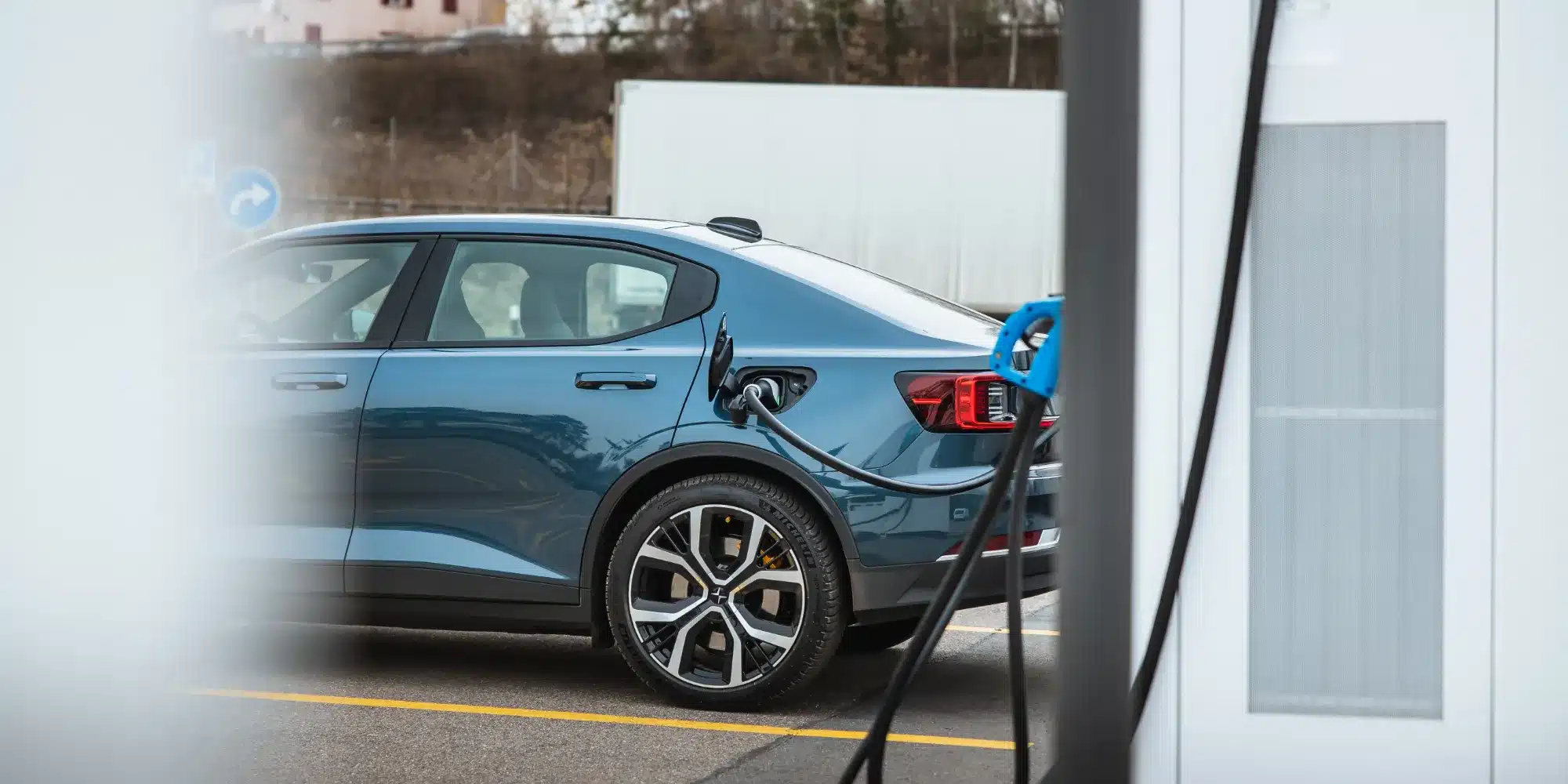
If you have a parking space near your home, you can theoretically charge your electric car using a standard socket. Almost all electric cars come with an emergency charging cable that allows you to do just that.

However, the reality is that the charging capacity is a maximum of 2.3 kW – meaning a 60 kWh battery will take over 17 hours to charge. For short everyday journeys of 30 to 40 km, this is still sufficient if the car is charged at night.

The bigger problem is safety. Household sockets are not designed for several hours of continuous operation under heavy load. The consequences: overheated cables, tripped fuses and, in the worst-case scenario, a risk of fire – particularly in old buildings with outdated cable networks. The household socket is suitable as an occasional emergency measure, not a permanent solution.

Anyone who has access to a CEE industrial socket in an underground car park can charge much quicker and more safely. A mobile wallbox with an integrated protective circuit in between is also recommended here. Mobile wallboxes such as the Pulsar Plus wallbox or the go-e Charger can charge safely at different types of sockets.

What it really costs to charge without a wallbox

You’ll pay significantly less at a home wallbox than at a normal public station – that’s a fact. If you only charge spontaneously at public stations without a subscription, you lose part of the cost advantage compared to a combustion engine vehicle. The price advantage comes when charging is regularly cheaper: at work, via a monthly flat rate such as the neighbourhood solution in the car park, or via an all-inclusive offer such as the Clyde Premium subscription. With the ‘Premium: with electricity’ option, electricity can be accessed both at public charging stations and at home or at work.

So the decisive factor isn’t whether you charge publicly – it’s how often and at what price.

Who can cope well without a wallbox – and who can’t?

Without a home charging station, an electric car works well if you drive less than 80 km a day, make regular stops at places where charging stations are available and see charging as an integral part of everyday life – just like stopping at a petrol station in the past. An electric car with a large battery also helps: fewer charging stops, more freedom in your plans.

For those who travel long distances every day and need maximum flexibility, a home charging station is more convenient in the long term. This is not a judgement, but a different usage profile.

Charging with Clyde – even without a wallbox at home

To ensure that you can plan your charging even without your own wallbox, Clyde offers two simple options:

With ‘Basic – without electricity’, you can charge for yourself via the chargeON charging app, which you receive automatically. With Clyde, your charging rate via the chargeON app is CHF 0.28/kWh for electric vehicles from the VW, Audi, SEAT, Škoda and CUPRA brands. This offer is valid throughout Switzerland at all AMAG locations and in selected car parks, including fast-charging stations.

With ‘Premium – with electricity’, public charging at 98% of the charging stations in Switzerland and 80% in Europe is included in your monthly payment. Anyone who charges privately – at home or at work – will be reimbursed for the charging costs. The result: fixed costs and no surprises – wherever you charge.

Frequently asked questions

Yes. Workplace, public charging stations, neighbourhood solutions – if you plan ahead, you’ll find enough charging options for everyday life.
Not always. If you only charge spontaneously at public stations, you lose the cost advantage over a petrol car. With the Clyde Premium subscription, public charging is already included in the monthly rate – that changes the maths.
Can I charge my electric car from a household socket? Technically yes, with the emergency charging cable included. As a permanent solution, the household socket isn’t suitable: charging power is low and the fire risk from overheating is real. A mobile wallbox is the safer alternative.
Do I have a right to a wallbox as a tenant? Not yet. The Federal Council is working on a legally secured “right to charge” – but it isn’t in force yet. Until then, it’s worth asking your landlord together with your neighbours.
What is the Clyde Premium subscription? A subscription option where public charging at 98% of all Swiss charging stations is included in the monthly rate. If you charge privately, you get reimbursed for charging costs.


Technically yes, with the emergency charging cable included. As a permanent solution, the household socket isn’t suitable: charging power is low and the fire risk from overheating is real. A mobile wallbox is the safer alternative.
Not yet. The Federal Council is working on a legally secured “right to charge” – but it isn’t in force yet. Until then, it’s worth asking your landlord together with your neighbours.
A subscription option where public charging at 98% of all Swiss charging stations is included in the monthly rate. If you charge privately, you get reimbursed for charging costs.

Just try it.
Your way.

Start your journey into e-mobility now, risk-free: insurance, service, taxes and, if you want, even electricity in one monthly rate.

Other electrifying articles: