E-Mobility
Electric cars in winter: the best tips to prevent range loss
Electric cars in winter: the best tips to prevent range loss
Yes, an electric car loses range in winter. The TCS reckons on around 1% per degree below the WLTP test temperature of 23 degrees – so at zero degrees, about a quarter. With a few simple tricks, you can win a large part of it back. Here are the most effective ones.

Written by Laura on 28.11.2024

The 8 best tips for electric cars in winter
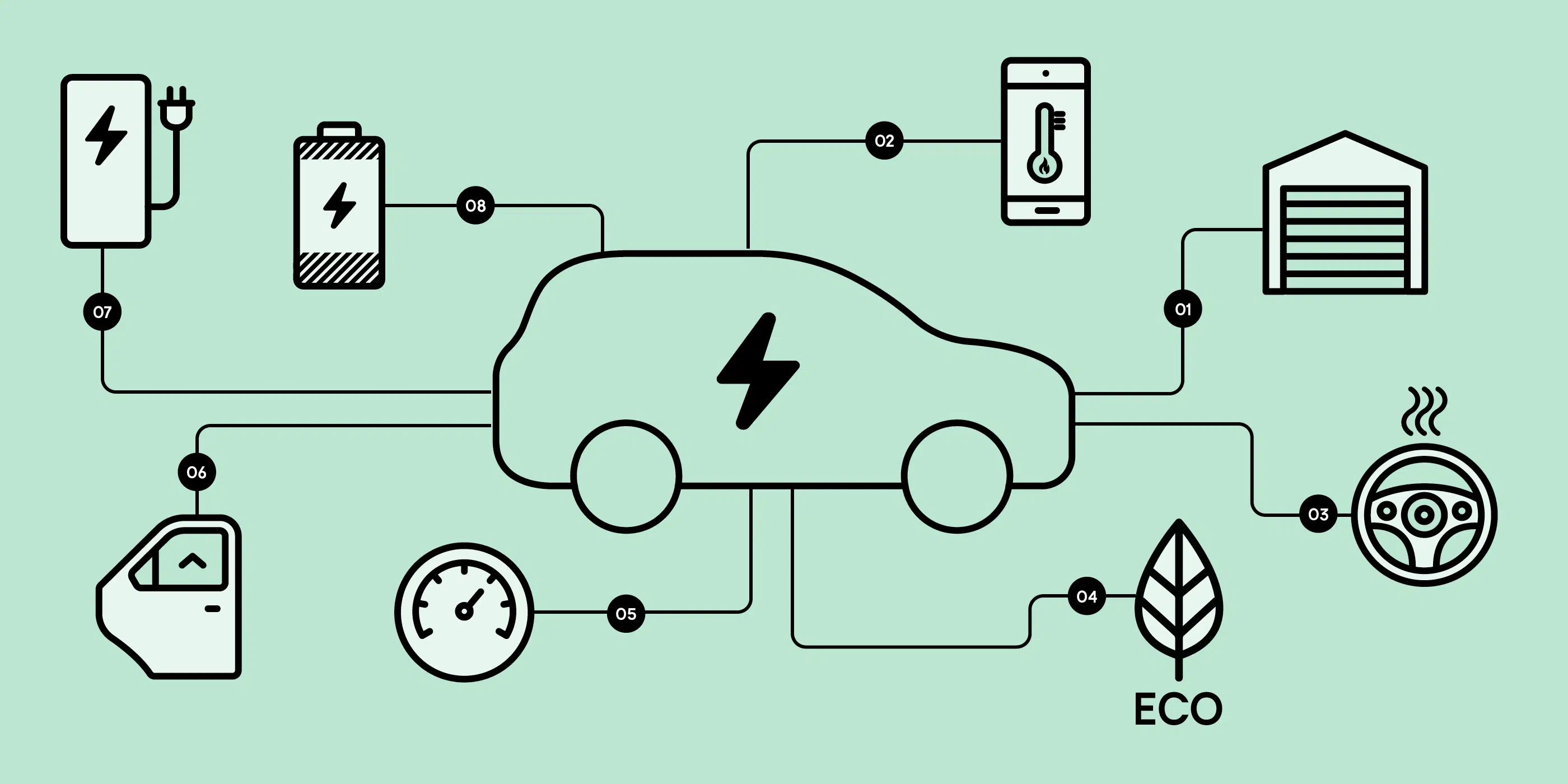
Tip 1: Park your electric car in a garage whenever possible, so the battery doesn't get too cold.
Tip 2: Preheat the car and the battery before you set off. Simply tell your car when you want to leave via the vehicle settings or app. Around 15 minutes of preheating is enough for the battery to reach its ideal operating temperature. Ideally, use electricity from a wallbox to do this.
Tip 3: Winter in Switzerland can get cold and miserable. Still, try to do without the air heating. Use your electric car's seat and steering wheel heating instead – they need much less energy. Tip 4: Drive in eco mode to save energy and prevent the wheels from spinning. Tip 5: Drive more slowly. Air resistance increases with the square of your speed, so the effect is bigger than ten kilometres per hour might suggest. Driving at 110 km/h instead of 120 on the motorway is enough. Your braking distance benefits too.
Tip 6: Fresh air is nice. But don't keep doors and windows open for too long, so you don't waste electricity on heating. Tip 7: Plan your fast-charging stop using your car's navigation system. Many models will then preheat the battery on the way to the charging station, and charging is noticeably faster. Without preheating, charging power ramps up only slowly in the cold, because the chemical reactions in the cells run more slowly. Tip 8: Keep the charge level between 20 and 80% for everyday driving. This is gentler on the cells. In winter, you're better off at the upper end of this range, because the heating and preheating need extra energy and a cold battery delivers less power at a low charge level.
Our conclusion
Frequently asked questions
Other electrifying articles:
 11. August 2026
E-Mobility
Electric vs. hybrid: which drivetrain is really worth it today
Electric, mild, full or plug-in hybrid: what fits your everyday life? The direct comparison with numbers, pros and cons, and a clear recommendation.
 15. June 2026
E-Mobility
Joris Ryf x Clyde: How an electric car subscription fits into an athlete’s life
E-mountain bike world champion Joris Ryf shares his experiences with the Audi Q6 e-tron from Clyde – from training sessions and race trips to charging on the go.
 26. May 2026
E-Mobility
Rising petrol prices: Why the comparison between petrol and electricity is clearer than ever in 2026
Petrol costs over CHF 13 per 100 km – electricity at home only around CHF 5. Why prices are going up, how much an electric car can really save you and how to switch risk-free.
 19. March 2026
E-Mobility
Affordable electric cars in Switzerland: a beginner’s guide
Is an electric car affordable in Switzerland? Charging, range, subscription vs. purchase – the complete 2026 beginner’s guide.
 22. January 2026
E-Mobility
The perfect electric family cars
Which electric car suits your family? An overview of models with plenty of space, a large boot and a long range.
 10. December 2025
E-Mobility
Buying a used electric car: Is it worth it?
A used electric car can be a smart choice. What to look out for when buying a used electric car — and the risk-free alternative.
 30. June 2025
E-Mobility
Once electric, always electric – my switch from combustion engine to electric
8 years of driving electric: Hans Fischer's first-hand account of the shift to sustainable, efficient and future-proof mobility.
 05. May 2025
E-Mobility
The benefits of an electric car: what makes the switch worth it – and what doesn't
What does an electric car really bring in everyday life? Costs, environment, driving feel and the drawbacks, honestly assessed.
 28. January 2025
E-Mobility
Is an electric car worth it for low-mileage drivers?
Why is an electric car worth it even for low-mileage drivers? Low costs, sustainability and flexible subscriptions with 250 km/month.
 26. September 2023
E-Mobility
The truth about electric cars: 10 persistent myths put to the test
We've gathered the most common electric car myths and set the record straight with the facts.
 20. June 2023
E-Mobility
Boris Baldinger x Clyde: an experience report
Boris Baldinger, freelance business and personal branding photographer, tests Clyde's car subscription. Read his experience report now!