E-Mobility

Small electric car: our top 4 for Switzerland

Tight parking garages, short trips, rarely more than two people on board: for many people in Switzerland, a small car fits everyday life better than an SUV. For a long time that meant doing without, because electric options in this class were scarce. That's changed. In 2026, a whole new generation of small electric cars is rolling onto the market, with ranges that hold up in everyday use and boots that punch above their class. Here are the four best small electric cars at Clyde, and what actually matters when you're choosing one.

author image

Written by Laura on 01.08.2022

VW ID. Polo und viele weitere E-Autos im Abo von Clyde.

What counts as a small electric car?

In the car world, «small» stretches surprisingly far. A look at the length helps put things in perspective:

Microcars measure up to about 3.7 m. Classic city cars with four seats and a tight boot.

Small cars fall between roughly 3.9 and 4.1 m. Five seats, a boot big enough for the weekly shop, and it still fits into any parking garage without trouble.

The compact class starts at around 4.2 m. That's Golf territory. If you land here, you're usually no longer looking for a small car, but a manageable one.

Below that sits a category of its own: light vehicles like the Citroën AMI. Legally, they don't count as passenger cars and top out at 45 km/h. More on that further down.

Small electric cars at Clyde: our top 4

VW ID. Polo: the newcomer with the big boot
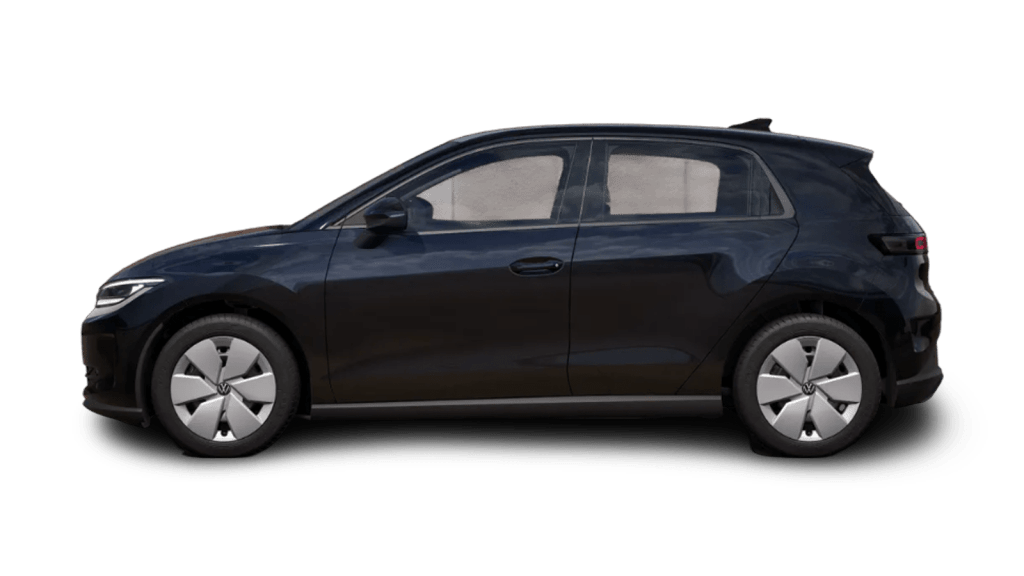
Ideal for: everyday life with plenty of luggage.

After more than 20 million units sold, the Polo goes electric. At 4.05 m, it stays a compact city car on the outside, but grows noticeably on the inside: 441 litres of boot space, 1,240 litres with the seats folded down. That's around 25% more than the combustion-engine Polo.

When it comes to controls, VW takes a deliberate step back: the steering wheel and climate controls get physical buttons again instead of touch surfaces. The vehicle-to-load function outputs up to 3.6 kW, so you can charge your e-bike or run a cool box.

  • mid January

    VW

    ID. Polo

    vehicle

    from

    579

    CHF

    month

    48 months

    250 km/month
    430 km range (WLTP)
    105 kW charging power DC
    Front-wheel drive

    1 variant available

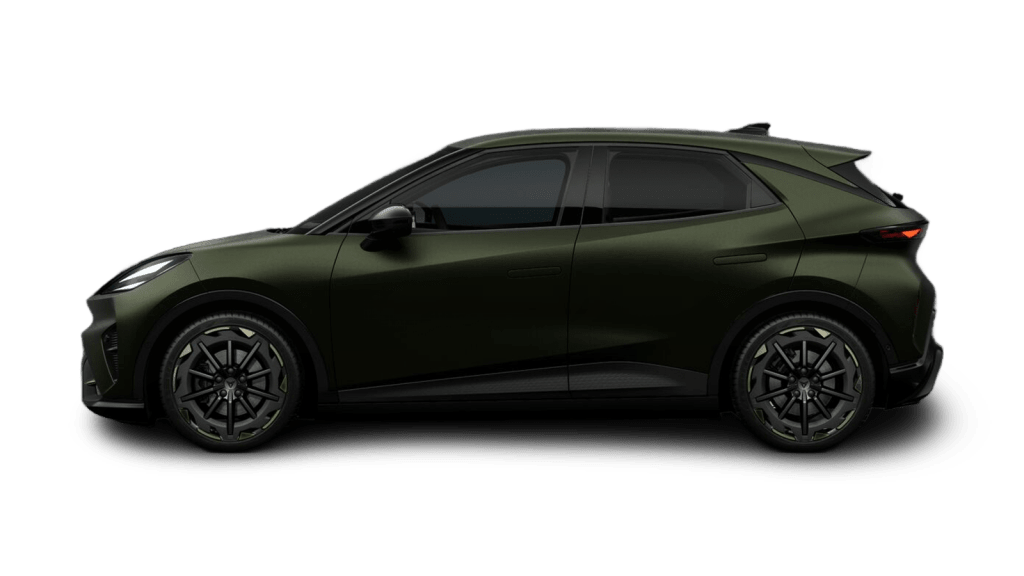
CUPRA Raval: small in size, loud in presence
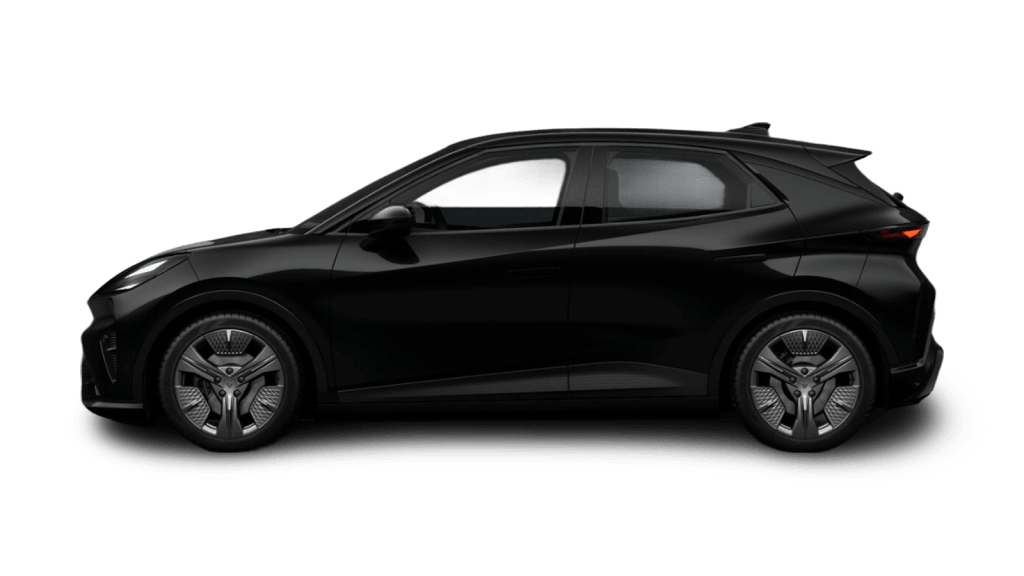
Ideal for: anyone who wants presence and kit.

The Raval shares its platform and dimensions with the ID. Polo, but not its character. Designed in Barcelona, it goes for a look that stands out and kit from a class above: a 475-watt Sennheiser AMBEO sound system, matrix LED headlights that dim around oncoming traffic, and flush door handles that pop out as you approach.

The boot holds 441 litres, just like the ID. Polo. If you're after a small car that doesn't necessarily look like the sensible choice, this is your candidate.

  • mid December

    CUPRA

    Raval

    vehicle

    from

    569

    CHF

    month

    48 months

    250 km/month
    380 km range (WLTP)
    105 kW charging power DC
    Front-wheel drive

    2 variants available

    Car model preview image
    Car model preview image

Renault R5 E-Tech: retro meets everyday life
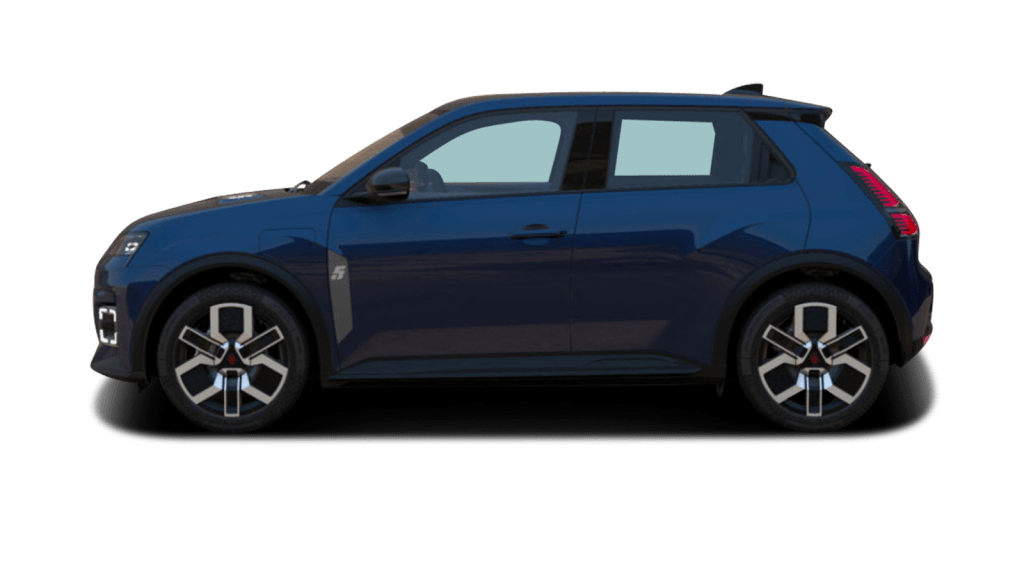
Ideal for: anyone who wants to stay compact and still go the distance.

The R5 references the 1970s icon and repackages it. At 3.92 m, it's the shortest car on this list, yet it still delivers 410 km of range. That combination is hard to find elsewhere: this compact and this practical for everyday use, at the same time.

On the motorway, the range melts away faster than in city traffic. For short to medium distances, though, it remains one of the most charming options around.

  • mid February

    Renault

    R5 E-Tech

    vehicle

    from

    769

    CHF

    month

    48 months

    250 km/month
    410 km range (WLTP)
    100 kW charging power DC
    Front-wheel drive

    1 variant available

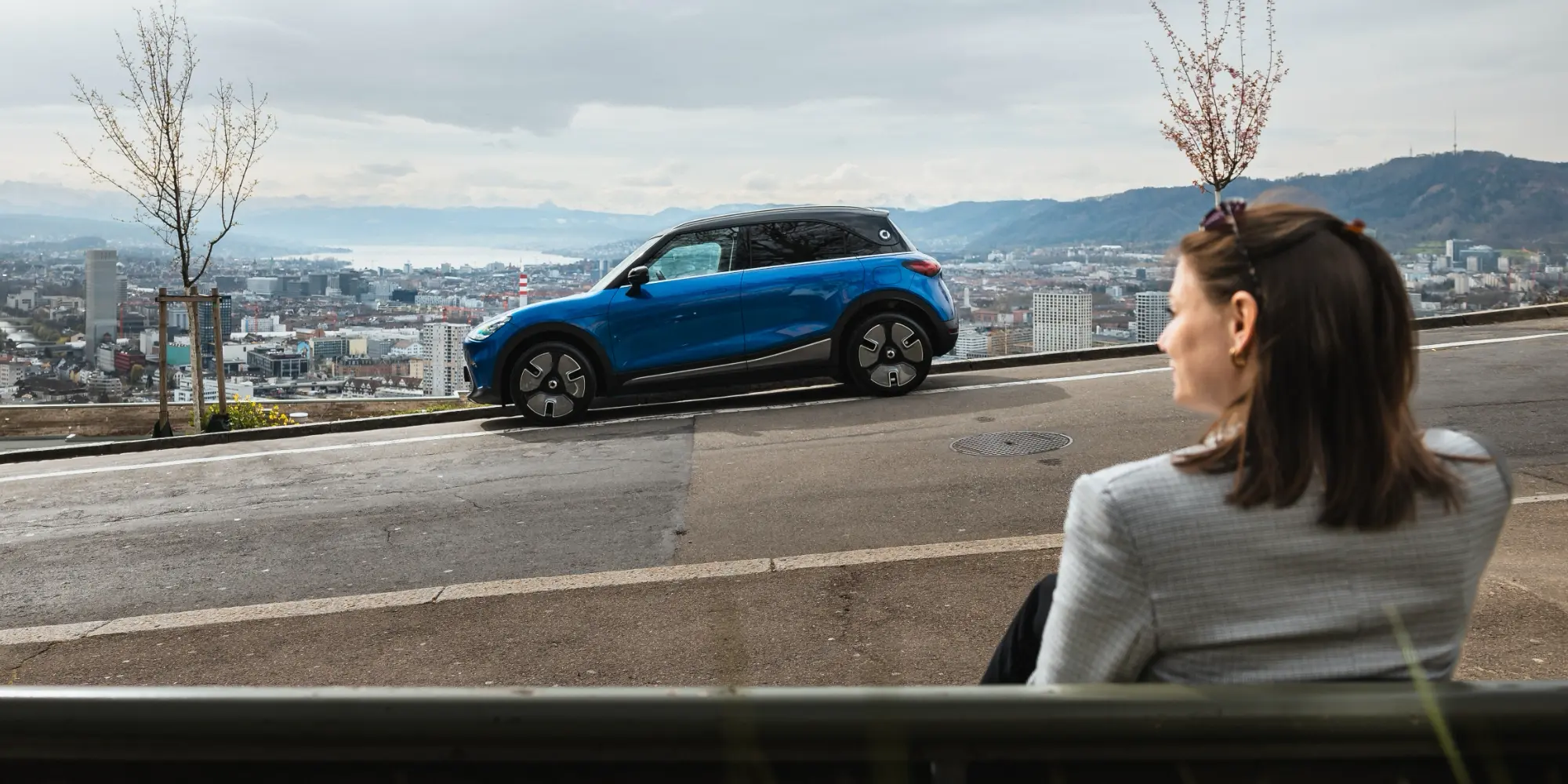
Smart #1: the biggest small choice

Ideal for: anyone happy to let «small» be a little more generous.

At 4.27 m, the Smart #1 strictly falls into the compact class, making it about as long as a Golf. It still belongs on this list, though, because it combines that small-car feel with a noticeably longer range: 440 km on the WLTP cycle, plus 150 kW of charging power, the highest figure in this selection.

Practical for everyday use: the rear bench slides by 13 cm, so you choose between legroom and boot space. Folded down, the load area holds up to 986 litres, plus a small frunk up front for your charging cables.

Electric microcars : Citroën AMI and Opel Rocks

Ideal for: short city trips and as a second car.

AMI and Rocks form a category of their own. In Switzerland, both count as light vehicles, not passenger cars. They top out at 45 km/h, offer two seats, and manage around 75 km of range.

That makes them less of a car replacement and more of an alternative to a scooter: for commuting within the city, for errands, for short trips in any weather. These vehicles aren't allowed on motorways, though.

Unfortunately, we currently don’t have an electric car that matches your filter settings.
Please adjust your filter to find your desired car.
The models at a glance

Length

Range

DC charging power

Seats

Renault R5 E-Tech

3.92

410 km

37 kW

4

VW ID. Polo

4.05 m

430 km

100 kW

5

CUPRA Raval

4.05 m

440 km

105 kW

5

Smart #1

4.27 m

440 km

150 kW

5

Ranges are based on the WLTP cycle. In everyday use they can be lower, especially in winter and at motorway speeds.

What to look for in a small electric car

Assess range realistically. Actual consumption runs higher over the year, because battery capacity drops in winter and the heating draws extra energy on top. 400 km can turn into around 320, depending on conditions. For everyday use, that's enough in most cases; for the drive to your ski holiday, it's worth planning your charging stops.

Compare charging power. There are differences between the models here: 100 kW on the R5 versus 150 kW on the Smart #1. If you regularly drive longer distances, this figure matters more than the range itself.

Check the boot. The differences within this class are bigger than the car lengths suggest. The ID. Polo and the Raval both hold 441 litres, while the Smart #1's sliding rear bench adjusts the volume as needed.

Sort out your charging option. The single most important point. If you can charge at home or at work, you'll generally drive especially cheaply and comfortably. Everyday life works without your own charging station too, but it takes a bit more planning.

→ Electric car without your own charging station: does it really work day-to-day?

Small electric car by subscription instead of buying

With a small electric car in particular, it's often still an open question how well it'll fit your everyday life long-term: is there enough space? Does the range work for you? Will it be your first car or your second? With a subscription, you get to try exactly that out, without committing to one vehicle long-term.

With Clyde's electric car subscription, you're on the road from as little as three months. Insurance, taxes, registration, service, tyres and the vignette are all included in the monthly rate, and the electricity option covers your charging on top. After the minimum term, you decide again and can switch to a different model depending on availability.

→ Cheap electric cars in Switzerland — the same question, but with a focus on price instead of size

→ The best electric family cars — in case you need more space after all

Frequently asked questions

Among Clyde’s small models, the Smart #1 leads with 440 km WLTP, closely followed by the VW ID. Polo with 430 km.
Monthly rates for small electric cars at Clyde start at around CHF 489. This includes insurance, taxes, registration, service, tyres and the vignette. The exact rate depends on the model, the term and the kilometre package, and is shown on the relevant model page.
In most cases, yes. The average commute in Switzerland is well under 40 km each way. With 380 to 440 km, the models on this list cover several days of driving.
For short trips around town, a light vehicle like the Citroën AMI or the Opel Rocks is enough. If you’ll also use the second car for day trips, the Renault R5 E-Tech or the VW ID. Polo is the better choice.
TCS gives a rule of thumb: for every degree Celsius below the WLTP test temperature of 23 degrees, range drops by around 1%. At zero degrees, that’s roughly a quarter. Driving fast costs extra range on top.
Microcars measure up to around 3.7 m and usually offer four seats with a tight boot. Small cars (city cars) range between around 3.9 and 4.1 m, have five seats and considerably more storage space.

Simply try it out.
Your way.

Start your journey into e-mobility risk-free: insurance, service, taxes and, if you like, even electricity, all in one monthly rate.

Other electrifying articles: