Inspiration

Road trip by electric car: the 7 best tips

A road trip by electric car no longer needs an elaborate charging plan. If you plan your stages around driving time rather than maximum range, you'll travel more relaxed and end up in places that never feature on a pure motorway route. These seven tips are about the route itself: how long a day's stage should be, where to spend the night and why direction matters in the mountains.

author image

Written by Livia on 30.10.2026

View from inside a car of a wooden dock extending into a calm lake, surrounded by autumnal trees.

A road trip is different from a holiday trip: there's no fixed destination where the car stays parked for a week. A new stage every day, a different place every evening. With an electric car, that's easier than many people think.

1. Think in stages, not in range

For a road trip, maximum range is the least important figure. What matters is what a single charging stop gives you: with most current models, that's 200 to 300 kilometres after around 25 minutes.

This lets you roughly estimate any day's stage. Four to five hours of driving with one stop in between makes for a relaxed day – and after two to three hours at the wheel, a break does you good anyway. If you plan much more than that, you'll spend the day in the car, whatever the drivetrain.

2. Choose accommodation with charging

This is the biggest lever on a multi-day trip, and it costs nothing but ten minutes when booking. If you sleep where you charge, you start every morning with a full battery and need one less stop on the road.

The charging power of the station hardly matters. The car is parked all night anyway, and even a basic station delivers enough in that time.

Handy tip: in booking site filters, the criterion is usually called “electric vehicle charging station”. If nothing is listed, it's worth sending a quick enquiry. Some places have charging stations that don't show up on any platform.

3. Make charging stops part of the route
Motorway service areas do the job perfectly well: toilets, coffee, something to eat, and the fast chargers are usually right next door. For a stop along the way, that's exactly right.

If the route allows, it's also worth making a charging stop somewhere that's a destination in its own right. By a lake, in an old town, at a viewpoint. The only difference is the order: pick the place first, then check whether you should charge there.

Over a week, the breaks add up to several hours. Spending some of them in places of your own choosing is where an electric car enriches a road trip rather than making it harder.

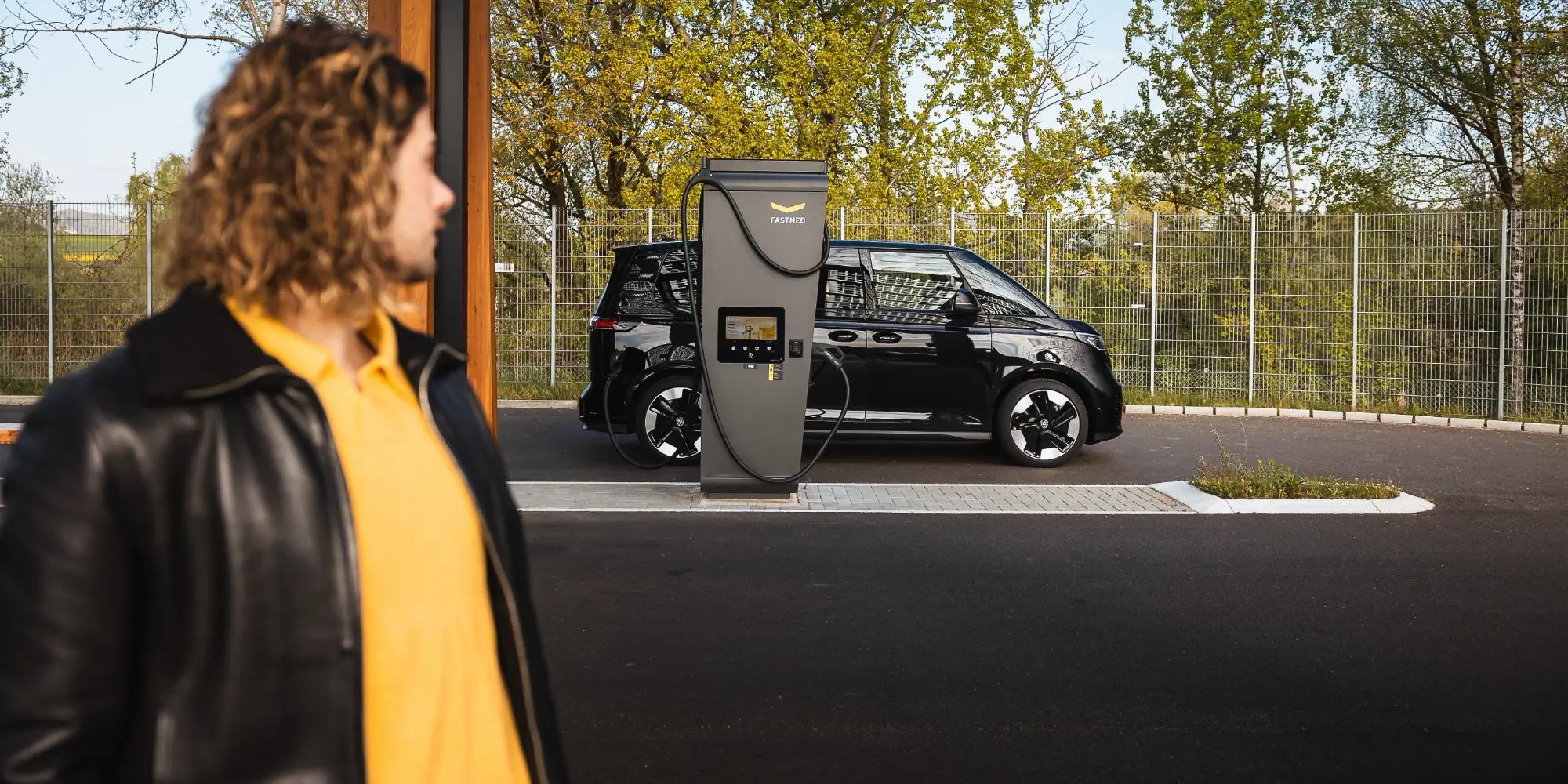
A person in a leather jacket looks towards a black VW ID. Buzz charging at a fast charging station.

4. Just set off

In Switzerland and much of Europe, there's no need to fix charging stops in advance. The fast-charging network is dense enough to simply set off. When the charge level drops to 20 to 30%, look out for the next station – and there's usually one nearby.

That's exactly what suits a road trip: you decide where to stop along the way, not a week earlier at the kitchen table. Navigation and charging apps show you the stations nearby as soon as you need them.

The only exception: remote valleys and mountain routes. Stations can be more sparse there, so it's worth a quick look at the map before you set off. The next tip explains what that looks like on a pass.

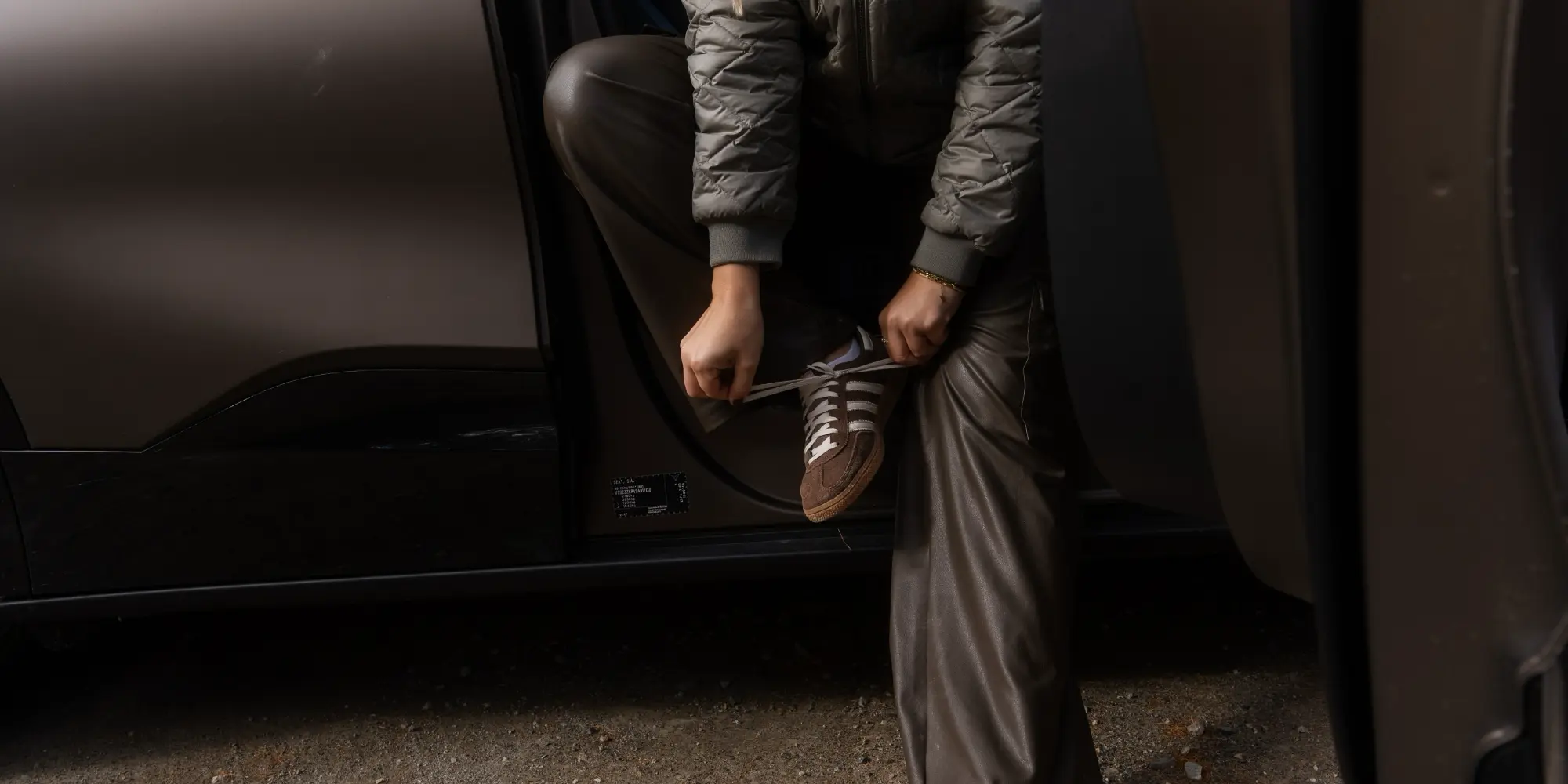
Person sitting on the edge of a car, tying brown and white sneakers.

5. In the mountains, direction matters

A mountain route uses much more energy than the same distance on the flat, because that energy is then stored in the vehicle as altitude. On the map, 40 kilometres over a pass look harmless; in terms of consumption, they behave like 80 or more. So charge in the valley before the climb: stations are more plentiful there, and you may well not find one at the top of the pass.

Going downhill, it's the other way round. The motor then works as a generator, pushing energy back into the battery. But the battery needs room for it. If it's fully charged, it can't take any more: regenerative braking stops, the car slows down less than usual when you lift off the accelerator, and the mechanical brakes take over.

For your route, that means two things. If you start by going uphill, feel free to charge to full in the valley, because the climb will create room for recuperation by itself. But if you start at the top – say, after a night in a mountain village – only charge to around 80%. Otherwise you'll waste the entire descent.

6. Trust your consumption, not the remaining range

The range display works with your consumption on the last drive. After a flat motorway stage, it shows too much as soon as you start climbing – and too little once the road flattens out again after the pass. On a route with a changing profile, it lags behind reality.

A glance at your current consumption tells you the same thing much earlier. If you check it after a few minutes of climbing, you'll see straight away that the rest of the stage will cost more than expected – and you can bring your charging stop forward accordingly.

7. Pack inside the car, not on the roof

Anything carried on the roof costs a disproportionate amount of energy at motorway speeds, because air resistance increases with the square of speed. The ADAC measured it: a bike rack on the roof increased consumption at 120 kilometres per hour by around 25%, while the same rack on the rear increased it by only about 8%.

For your route, that means: if you can choose between the roof and the rear, choose the rear. And anything that fits in the boot doesn't belong in a roof box. A rear rack is an investment, but on a longer trip it pays off at every charging stop.

Try a road trip without buying a car

Buying an electric car for a single trip rarely makes sense. With an electric car subscription from Clyde, you can set off with a short term: insurance, service, tyres, taxes and the vignette are all included in a fixed monthly rate, and so are additional drivers – handy if you take turns at the wheel. With the “Premium” electricity option, public charging is included too, which makes all the difference on a trip with lots of charging stops.

That way, one trip shows you how well an electric car suits you – before you commit for years.

More on this topic

Frequently asked questions

Hardly. On a long stage, you stop anyway – for the toilet, a coffee or something to eat. The charging stop falls exactly into that break. So it’s not so much the journey time that changes as the timing of your breaks: they happen where there’s a charging station, not wherever you happen to feel like stopping.
It depends on the vehicle and the route – there’s no general number. For a day’s stage of four to five hours, one stop is usually enough with current models. And if things get tight: the 20/80 rule is a recommendation for fast and battery-friendly charging, not a ban. The battery won’t mind if you occasionally run it lower or charge it fuller.
It happens, but it’s rarely a problem: the next station is usually only a few kilometres away. The car’s navigation system and charging apps show you whether a charging point is free before you arrive. And if you don’t wait until the last per cent, you still have the next location as an option.
First, the same as with any car: it should suit the trip. Enough space for everyone coming along and for the luggage – so for a family, an estate or an SUV rather than a small car. If there are two of you, a compact model is cheaper and easier to park in any old town. With an electric car, there’s one more point that’s easily overlooked on the data sheet: charging power matters more than battery size. A car that recharges quickly gets further on a long journey than one with a big battery and slow charging technology.

Sources

Just try it.
Your way.

Start your journey into e-mobility now, risk-free: insurance, service, taxes and, if you want, even electricity in one monthly rate.

Other electrifying articles: